THE UNIVERSITY OF ALABAMAยฎ
myBama
Worked Examples ยท Rubric-Annotated

See the four levels
in real artifacts.

Rubrics describe levels in words. This gallery shows them in artifacts โ€” Emerging through Exemplary, side by side, with annotations keyed to every criterion. Read it before you draft; read it again before you revise.

What artifacts look like

Three deliverables.
Three real shapes.

Before you tab through the level-by-level browser below, hold these three reference images in your head. Every artifact in the browser is some version of one of these shapes โ€” closer to Floor or closer to Exemplary, but the same scaffolding.
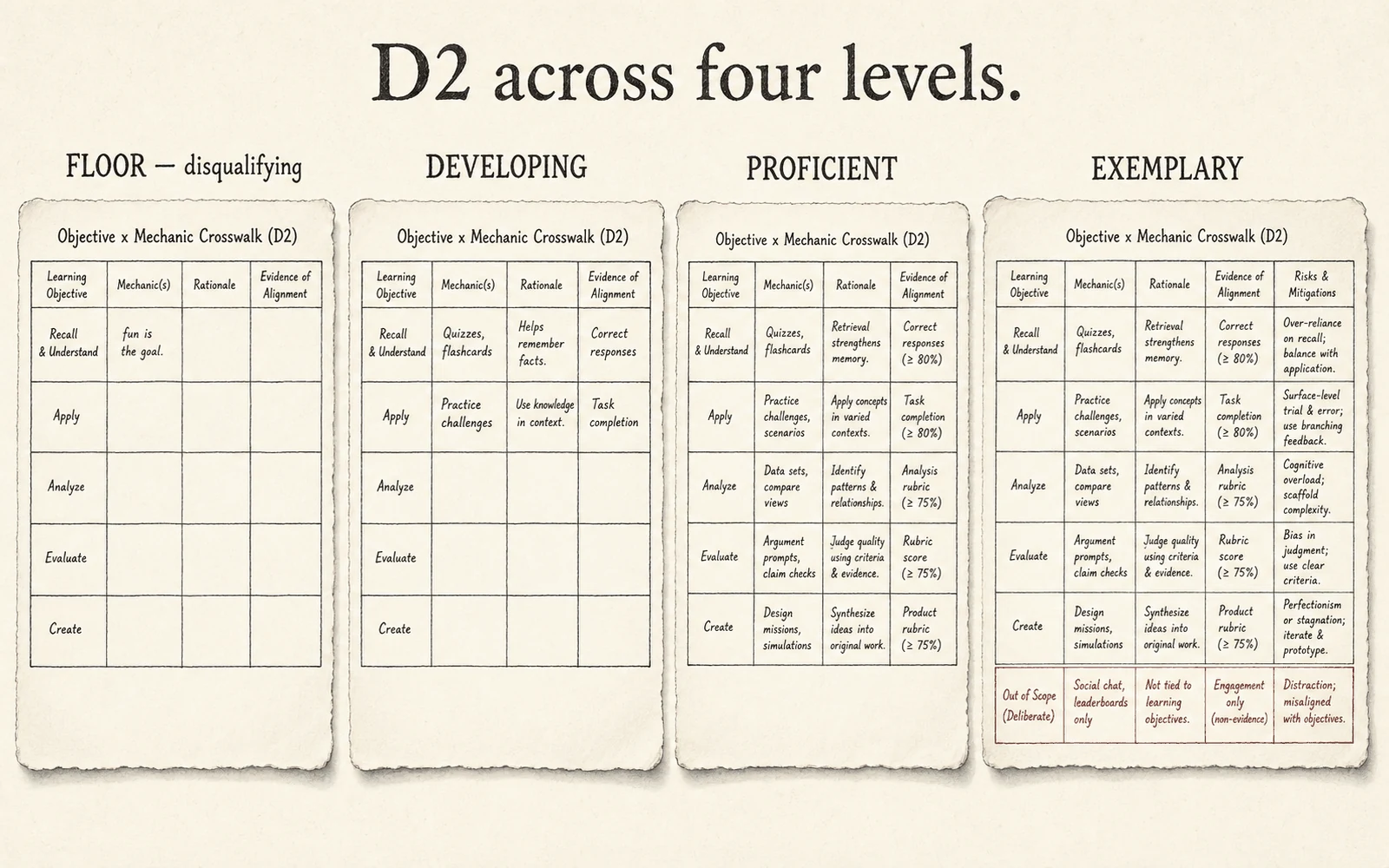
Four-panel comparison showing the same D2 crosswalk drafted at Floor, Developing, Proficient, and Exemplary quality levels.
D2 across four levels. The same Objective ร— Mechanic Crosswalk, drafted four ways. Notice what fills in as quality climbs: cited rationale, then risks, then a deliberate out-of-scope row.
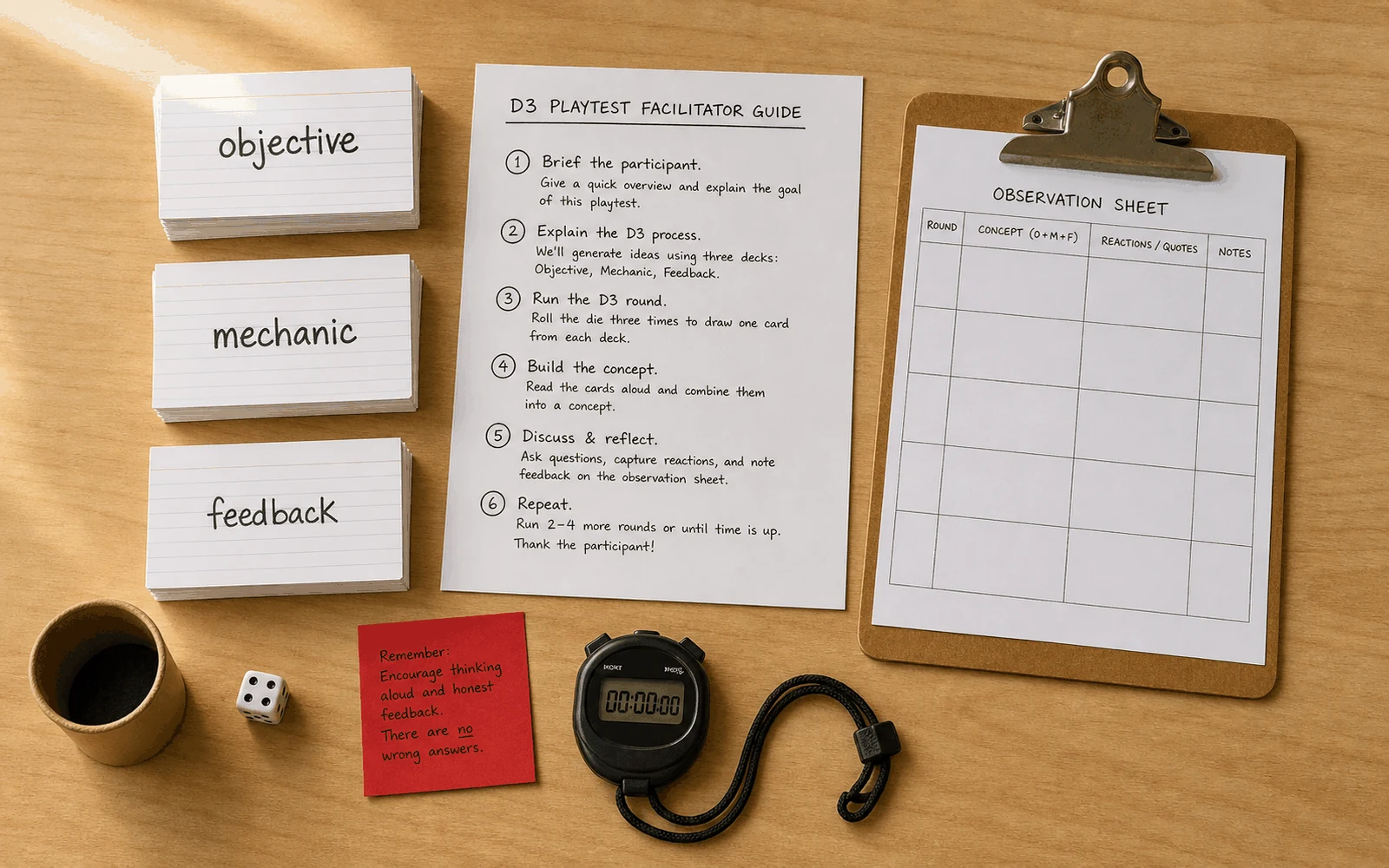
Overhead photograph of a paper prototype staged for facilitation: index cards in three labeled piles, dice cup, facilitator guide, stopwatch, observation clipboard.
D3 ready to run. What "playable in five minutes by someone who isn't you" looks like when it's actually staged. The clipboard is the tell โ€” observation is part of the deliverable.
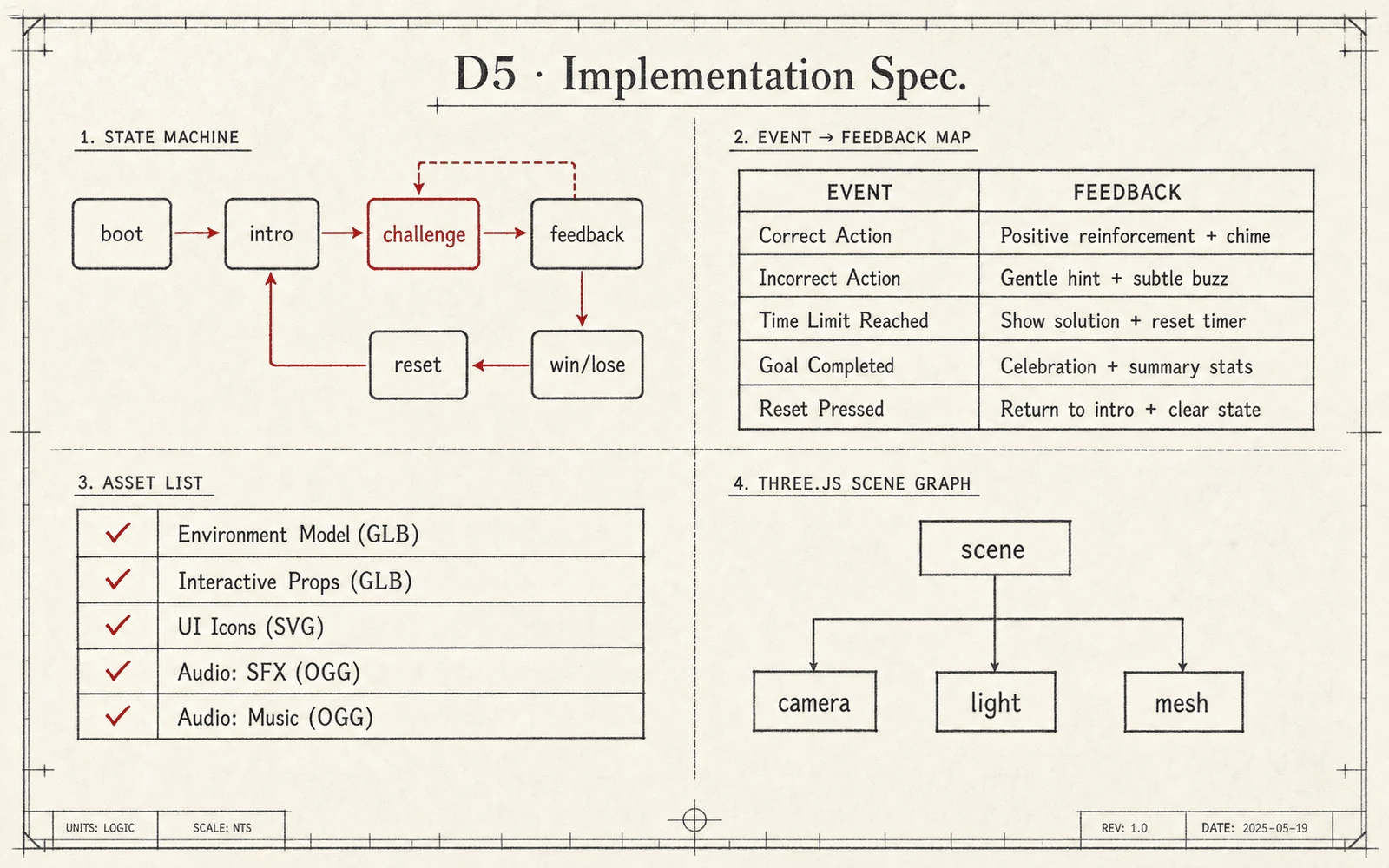
Architectural blueprint of a complete D5 implementation spec: state machine, event-feedback map, asset list, and Three.js scene-graph tree, all on one page.
D5 on one page. State machine, event map, asset list, scene-graph stub โ€” what a developer reads on day one. If any quadrant is missing, the spec isn't done.
Browse

Pick a deliverable.
Pick a level.

Deliverable: โ€” Viewing: โ€” Criteria covered: 0/5

The Artifact

What Separates This Level from the Next

Proficient is the floor for every criterion. Exemplary is generous but not required. Developing on any one criterion means the deliverable does not yet meet the credential threshold โ€” revise, don't average.